
Goal Zero
Yeti 700
$699
Pros & Cons
Pros
- 677Wh LiFePO4 capacity gives more runtime margin than 512Wh class stations
- Goal Zero build quality and ecosystem are reassuring for outdoor and emergency buyers
- 600W output covers many electronics, small appliances, and light-duty camping loads
Cons
- Often priced above better raw-spec competitors
- 20.3 lb weight is less grab-and-go than RIVER-class stations
- Solar input is practical but not a fast refill for repeated heavy use
At a Glance
Overview
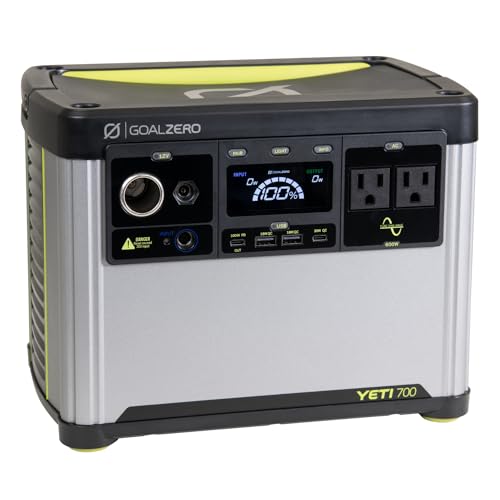
Goal Zero Yeti 700 Portable Power Station sits in the overnight electronics and CPAP tier with 677Wh of rated capacity and 600W of AC output. Our first-pass verdict is source-backed rather than hands-on: the important question is whether this station fits the loads you actually need to keep running. The Yeti 700 is the premium rugged mid-size pick. Buy it for brand trust and outdoor durability; skip it if your main metric is watt-hours per dollar.
Goal Zero Yeti 700 Portable Power Station
Prices may change · Free shipping with Prime
Runtime Fit
Using an 85% planning assumption for AC loads, Yeti 700 offers roughly 575 usable watt-hours before reserve and real-world variables. Treat it as an overnight electronics and CPAP station, not a refrigerator-first outage box. Runtime changes with actual watts, duty cycle, battery age, temperature, and whether you use AC or DC output.
Output And Surge
Yeti 700 is listed at 600W continuous output with 1,000W surge-class headroom. Capacity answers how long the station may run. Output answers whether the load starts at all. Check refrigerator compressors, pumps, power tools, and cooking appliances before treating any estimate as reliable.
Recharge And Solar
The published solar-input figure is 200W, and AC recharge is listed around 2 hours. Solar panels rarely deliver nameplate wattage all day, so plan around realistic sun, panel angle, weather, and the station's voltage/connector requirements.
Who Should Buy It
Yeti 700 makes the most sense for camping, rv, outage buyers who understand the limits of its capacity tier. Buy it when the load matches the station. Size up when refrigerator, CPAP, RV, jobsite, or home-panel expectations exceed the Wh, surge, weight, or recharge envelope.
Our Verdict
The Yeti 700 is the premium rugged mid-size pick. Buy it for brand trust and outdoor durability; skip it if your main metric is watt-hours per dollar.
Goal Zero Yeti 700 Portable Power Station
$699
Prices may change · Free shipping with Prime
| Full Specifications | |
|---|---|
| Capacity | 677Wh |
| AC output | 600W |
| Surge | 1000W |
| Battery | LiFePO4 |
| Cycle life | 4000cycles |
| Solar input | 200W |
| AC recharge | 2hr |
| Weight | 20.3lb |
| UPS/EPS | Pass-through; model-specific |
| Ports | AC, USB-C, USB-A, 12V |
| Expandable | No |
Frequently Asked Questions
Can the Yeti 700 run a refrigerator?
Can the Yeti 700 run a CPAP overnight?
Is the Yeti 700 a whole-home backup system?
Can the Yeti 700 replace a UPS?
Related Buying Guides
Compare With Similar Power Stations
Head-to-Head Comparisons
Goal Zero Yeti 700 Portable Power Station
$699
Prices may change · Free shipping with Prime